

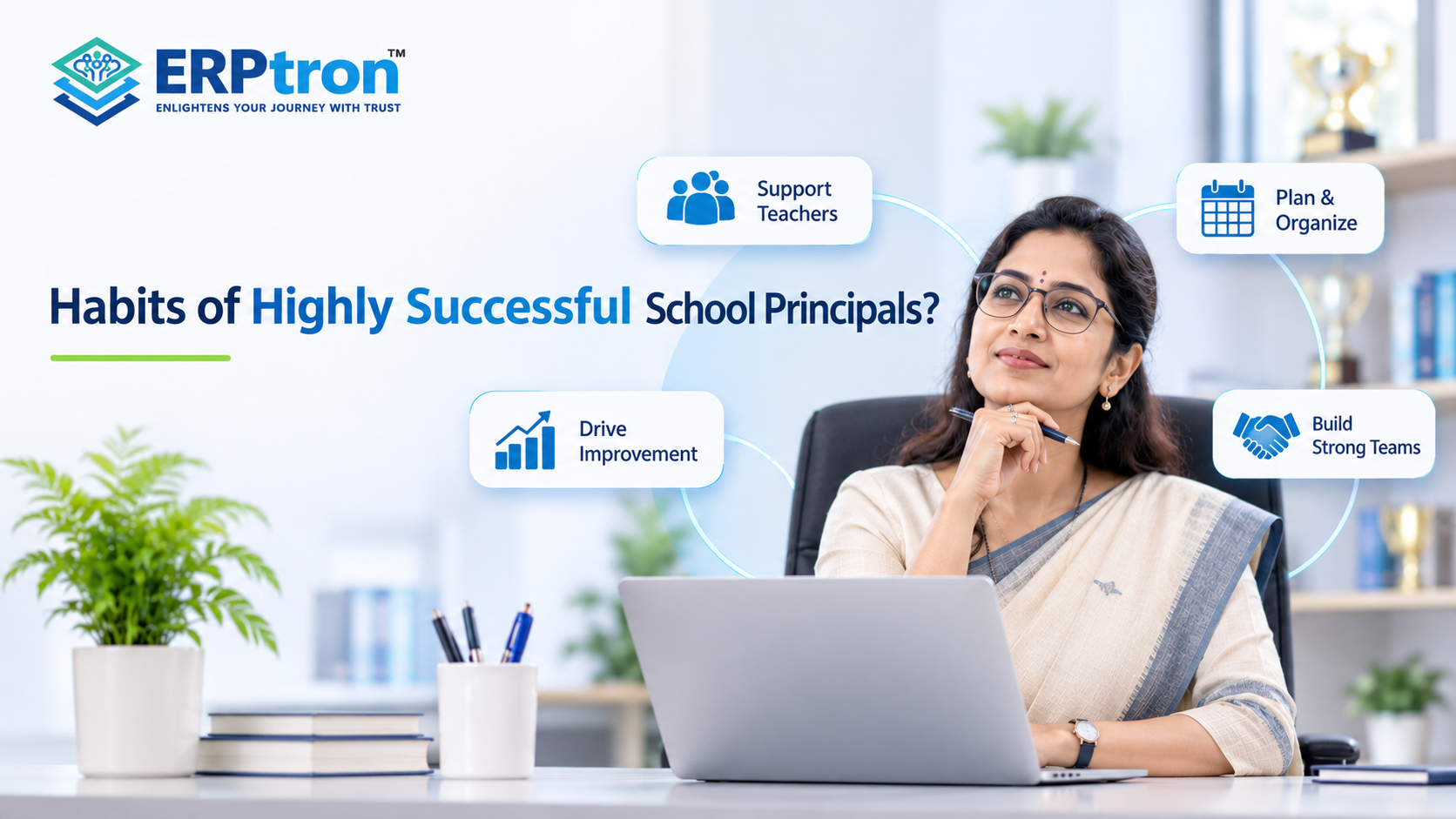
A school principal’s job is about much more than managing daily school activities. Principals need to support teachers, make important decisions, communicate with parents, manage resources, solve problems, and keep the school moving forward.
The most effective principals do not try to handle everything themselves. They set clear priorities, build strong teams, delegate responsibilities, use data, communicate well, and continuously look for ways to improve.
Good leadership is not just about managing today’s problems. It is about creating the people, systems, and culture that help the school succeed over time.
In this guide, we’ll explore the key habits of highly successful school principals and how these habits can help them lead their schools more effectively.
Top Habits of Highly Successful School Principals
Successful school principals do more than manage daily activities. They support teachers, help students, make good decisions, and work continuously to improve their schools.
1. They Start With a Clear Vision
Successful principals know what they want their school to achieve. They set clear goals for academic results, teacher development, student experience, parent communication, and school management. A clear vision helps teachers and staff work towards the same goals.
2. They Put Students First
Successful principals consider how their decisions will affect students. They focus on better learning, student safety, academic growth, and overall development.
3. They Know How to Prioritize
Principals handle many tasks every day. Successful ones focus on the most important issues first. They delegate routine work and give more time to decisions that affect students, teachers, and the school.
4. They Build Strong Relationships With Teachers
Successful principals listen to teachers, understand their challenges, appreciate their efforts, and support their professional growth. This builds trust and creates a better working environment.
5. They Communicate Clearly
Clear communication helps teachers and staff understand their responsibilities, deadlines, and goals. It also reduces confusion, repeated questions, and misunderstandings.
6. They Listen Before Making Decisions
Successful principals listen to teachers, students, parents, and staff before taking action. This helps them understand problems better and make fair decisions.
7. They Delegate Work
A principal cannot manage everything alone. Successful principals assign responsibilities to capable teachers, coordinators, and administrative staff. This allows them to focus on important school-wide decisions.
8. They Build Strong Systems
Successful principals create clear systems for attendance, reporting, approvals, communication, and daily operations. Good systems reduce repeated problems and help the school run smoothly, even when the principal is unavailable.
9. They Use Data to Make Better Decisions
Successful principals review important school information, such as attendance, examination results, fee collection, admissions, and teacher workload. This helps them understand problems and make informed decisions.
10. They Review School Performance Regularly
Successful principals regularly check what is working and what needs improvement. They review student performance, teacher challenges, parent feedback, and school processes to identify problems early.
11. They Stay Connected With the School
Successful principals visit classrooms, speak with teachers, interact with students, and observe daily activities. This helps them understand what is happening beyond reports and meetings.
12. They Trust Their Teachers
Experienced teachers need the freedom to use their knowledge and skills. Successful principals set clear expectations, provide support, and allow teachers to make appropriate decisions.
13. They Recognize Good Work
Successful principals appreciate good teaching, teamwork, extra effort, and student support. Even a simple thank-you can help teachers and staff feel valued.
14. They Learn From Mistakes
Instead of only blaming people, successful principals try to understand why a mistake happened. They identify what went wrong and improve the process to prevent similar problems.
15. They Solve Problems Early
Successful principals address conflicts and concerns before they become bigger issues. They listen to everyone involved, check the facts, and work towards practical solutions.
16. They Maintain High Standards
Successful principals set clear expectations for teaching, attendance, discipline, safety, and professional behaviour. They also provide the guidance and resources needed to meet those expectations.
17. They Invest in Teacher Development
Successful principals encourage teachers to attend training sessions, workshops, and mentoring programmes. They help teachers improve their teaching methods, subject knowledge, and technology skills.
18. They Use Technology to Solve Real Problems
Successful principals adopt technology when it can solve a genuine problem. They look for tools that simplify attendance, admissions, fee management, examinations, communication, and reporting.
19. They Reduce Unnecessary Administrative Work
Principals and teachers often spend too much time on paperwork, reports, and repeated follow-ups. Digital tools and school management systems can simplify these tasks and give staff more time to focus on students and teaching.
20. They Understand What School Data Means
Successful principals do not just collect data. They try to understand it.
For example, if student attendance drops, they check which classes are affected, whether the same students are repeatedly absent, and what might be causing the problem. This helps them take appropriate action.
21. They Communicate With Parents Regularly
Successful principals keep parents informed about school activities, academic progress, achievements, and important updates. Regular communication builds trust and strengthens the relationship between parents and the school.
A structured parent communication system can help schools share relevant information consistently and reduce confusion.
22. They Listen to Students
Students can share valuable feedback about their learning experience, classroom environment, and school activities. Successful principals give students appropriate opportunities to express their concerns and suggestions.
23. They Care About Teacher and Student Well-Being
Successful principals understand that people are just as important as results. They pay attention to teacher workload, student stress, classroom safety, and the overall school environment.
24. They Make Decisions Based on Facts
Successful principals do not rely only on rumours or assumptions. They gather information, verify the facts, and then make decisions. This helps them handle problems fairly and build trust.
25. They Apply Rules Consistently
Successful principals apply school rules and policies fairly across students, teachers, and departments. Consistency helps people understand expectations and builds confidence in leadership.
26. They Lead by Example
Successful principals follow the same standards they expect from others. They demonstrate punctuality, professionalism, honesty, accountability, and a willingness to learn.
27. They Keep Learning
Education continues to change. Successful principals keep learning about teaching methods, school management, technology, and student needs through training, reading, professional networks, and experience.
28. They Think Beyond Daily Problems
Successful principals make time to plan for the future instead of focusing only on daily tasks. They think about improving academic results, supporting teachers, meeting parent expectations, and preparing the school for future challenges.
29. They Develop Future Leaders
Successful principals help coordinators, department heads, senior teachers, and other staff members develop leadership skills. This distributes responsibility and reduces dependence on a single person.
30. They Focus on Continuous Improvement
Successful principals regularly ask what is working, what needs to change, and how school operations can improve. They look for opportunities to simplify tasks, delegate responsibilities, and solve recurring problems.
Daily Habits of Highly Effective Principals
Good school leadership is built through small and consistent actions. A principal does not need to spend every day in meetings or handle every problem personally. The goal is to stay focused, connected, and organized throughout the day.
1. Every Morning
A principal can start the day by reviewing the most important priorities. This may include checking important updates, identifying urgent issues, speaking with key staff, and reviewing the day’s activities. This helps the principal understand what needs immediate attention and what can be handled later.
2. During the School Day
Effective principals stay connected with what is happening around the school. They may visit classrooms, speak with teachers, observe students, and check important school activities. This gives them a better understanding of the school’s daily environment instead of depending only on reports.
3. Throughout the Day
Principals should avoid trying to handle every task themselves. They can delegate work to the right people, make decisions based on available information, and communicate clearly with teachers and staff. They should also protect some time for important work such as planning, reviewing performance, and thinking about the school’s future.
4. At the End of the Day
Before finishing the day, principals can review what was completed and what is still pending. They can also identify the most important tasks for the next day. This simple habit can help prevent important work from being forgotten.
5. Every Week
A weekly review can help principals look at the bigger picture. They can review school performance, discuss teacher challenges, look at student concerns, review important data, and identify areas that need improvement.
The Most Important Habits at a Glance
The habits of effective school principals can be summarized into ten simple points:
- Have a Clear Vision: Know where the school needs to go.
- Put Students First: Consider student needs when making important decisions.
- Prioritize Work: Focus on what is most important.
- Listen Carefully: Understand teachers, students, and parents.
- Delegate Work: Give responsibilities to the right people.
- Build Strong Teams: Create a supportive and responsible team.
- Use Data: Use relevant information to make better decisions.
- Communicate Clearly: Make expectations and information easy to understand.
- Use Technology Wisely: Adopt technology that solves real problems.
- Keep Improving: Regularly look for ways to make the school better.
These habits work together. A clear vision gives direction, strong teams help execute plans, good systems create consistency, data provides useful information, and communication keeps everyone aligned.
How Does Technology Support Better School Leadership?
Technology cannot replace a good principal, but it can make school management easier. A connected school management system can bring important information together in one place.
Depending on the system, principals may be able to access information related to students, teachers, attendance, fees, examinations, admissions, communication, and other school operations.
Instead of asking different departments for separate reports, principals can access relevant information through connected systems. This can reduce unnecessary follow-ups and save administrative time.
For example, a student attendance management system can help principals identify attendance patterns, while a fee management system can provide a clearer view of collections and pending payments.
The real value of technology is not simply replacing paper records. It is helping school leaders get better visibility, make informed decisions, and spend more time on students, teachers, and long-term improvement.
Common Leadership Mistakes Principals Should Avoid
Even experienced principals can make mistakes. Some common problems include:
- Micromanaging teachers instead of giving them appropriate responsibility.
- Trying to handle everything instead of delegating work.
- Ignoring teacher feedback and making decisions without understanding their challenges.
- Making decisions without enough information or checking the facts.
- Communicating only when there is a problem instead of keeping communication regular.
- Using technology without a clear purpose or avoiding useful technology completely.
- Focusing only on daily problems and ignoring long-term planning.
- Ignoring school culture and how people feel about the working environment.
- Avoiding difficult conversations when problems need to be addressed.
- Failing to develop future leaders within the school.
The goal is not to become a perfect principal. Good leadership is about recognizing what is not working, learning from it, and making small improvements consistently.
How Does ERPtron Support Successful School Principals?
School principals manage academics, teachers, students, finances, and daily school activities. ERPtron helps simplify these responsibilities by bringing important school operations together in one system. This saves time, keeps information organized, and helps principals manage their schools more efficiently.
1. School Operating System (School OS)
ERPtron School OS gives principals a broader view of the school’s core activities, including student management, admissions, fees, attendance, examinations, HR, library, and transport. Having these operations connected can help principals stay organized and manage the school more systematically.
2. Paperless Admission Platform
A well-managed admission process is important for school administration. ERPtron’s Paperless Admission Platform helps manage applications, document submission, verification, fee payments, and admissions digitally, reducing paperwork and making it easier for administrators to track the admission process.
3. School Fee Collection Hub
Principals need visibility into fee collections and pending payments. ERPtron’s School Fee Collection Hub helps schools manage fee structures, payments, receipts, concessions, dues, and reminders from one place, giving administrators a clearer view of fee-related activities.
4. Hybrid Digital Attendance Platform
Regular attendance tracking helps school leaders understand student attendance patterns. ERPtron’s Hybrid Digital Attendance Platform supports biometric devices and mobile-based attendance, helping schools maintain digital attendance records while keeping parents informed about relevant updates.
5. Exam Operating System
Examinations are an important part of academic management. ERPtron’s Exam Operating System helps schools manage admit cards, marks entry, tabulation, report cards, and rank lists digitally, reducing repetitive administrative work around examinations.
6. School Safety Hub
Principals and administrators need access to reliable student information when managing a school. ERPtron’s School Safety Hub helps keep student details and documents organized in one centralized system, making important records easier to access and manage.
7. Finance Automation Platform
Financial oversight is an important responsibility for school leaders. ERPtron’s Finance Automation Platform helps manage suppliers, expenses, payment vouchers, income and expense ledgers, and financial reports. This gives administrators better visibility into school spending and financial activities.
8. School Store 360
School stores involve inventory, books, accessories, sales, and related activities. ERPtron School Store 360 helps bring these records into a digital system, allowing administrators to monitor stock, sales, and store performance more systematically.
9. Library Pro System
A well-managed library is another part of effective school administration. ERPtron Library Pro helps schools manage book catalogues, availability, issues, returns, and fines digitally, reducing manual record-keeping and making library operations easier to monitor.
10. Smart HR Pro
Successful principals also need to manage their teaching and non-teaching teams effectively. ERPtron Smart HR Pro helps manage employee records, payroll, leave management, and role-based access, giving school administrators a more organized way to handle staff-related activities.
11. Transport Revenue System
School transport requires regular administrative oversight. ERPtron’s Transport Revenue System helps manage routes, seat availability, student allocations, route-based pricing, and transport payments, giving administrators better visibility into transport operations.
12. Teacher Mate
Communication is an important part of effective school leadership. ERPtron’s Teacher Mate mobile app helps students and parents access school notices, fee information, attendance, examination details, report cards, and study materials. This gives families easier access to important information and can reduce routine communication work for school staff.
13. Hostel Management System
For schools with hostel facilities, administrators need to keep track of bookings, available seats, fees, payments, and outstanding balances. ERPtron’s Hostel Management System brings these activities into a digital workflow, helping school leaders maintain better visibility over hostel operations.
Explore ERPtron’s features to learn more about how its connected modules can support school administration.
Conclusion
Strong school leadership is not about doing everything alone. It is about building the right people, systems, and processes.
Technology can help principals reduce repetitive work, access important information, improve communication, and understand school performance better. But technology alone cannot create a successful school.
The real foundation is strong people, reliable systems, useful data, clear communication, and continuous improvement.
A School ERP like ERPtron can support school leaders by bringing important information and daily operations together in one place.
A great principal does not try to manage everything alone. They build a school where people, systems, and technology work together to achieve better results.
ERPtron — Enlightens Your Journey with Trust.
FAQs
1. What are the habits of successful school principals?
Successful principals have clear goals, good communication, strong decision-making, and good listening skills. They also support teachers and keep improving the school.
2. How can principals improve school leadership?
Principals can improve leadership by setting clear goals, listening to teachers and students, using school data, delegating work, and reviewing progress regularly.
3. How can principals reduce teacher workload?
Principals can reduce workload by improving processes and using technology for tasks such as attendance, reports, communication, and record management.
4. How can principals use data to improve schools?
Principals can use data about attendance, academic results, admissions, fees, and other school activities to identify problems and make better decisions.
5. Should principals use School ERP software?
A School ERP can help principals connect school operations, access important information, automate routine tasks, and get better visibility into the school.